

A J.League matchday is one of the friendliest ways to spend an evening in Japan. Stadiums are clean and easy to reach, the food stalls are excellent, and the supporter sections sing from the first minute to the last.
Learning how to buy J League tickets is the part that stops many visitors. Some pages are in Japanese only, seat names look unfamiliar, and it is not obvious whether an overseas credit card will work.
The good news is that this has become much easier. J.LEAGUE now runs an English ticket hub, and a growing number of clubs sell tickets through English purchase pages.
This guide takes you from finding a match to scanning your QR ticket at the gate. Sales rules differ by club and by match, so always confirm the details on the official page before you pay.
- The safest way to buy official J.League tickets
- How to purchase tickets from outside Japan
- How to choose the right seat
- What to do when a match is sold out
- How to use your QR ticket at the st
Quick Answer: The Best Way to Buy J.League Tickets

Start with the official league page, then follow the link it gives you for the match you want.
- Check the official J.LEAGUE English ticket page.
- Choose a club or match.
- Open the official purchase page for that fixture.
- Select your seat and payment method.
- Save your QR ticket or your collection information.
What happens next depends on your situation.
- Direct English purchase available
complete everything on the English page. - Redirected to a club page
use the club’s own official ticket page, in English or with a browser translation. - Match sold out
check official resale and any additional releases. - Buying close to kick-off
buy online first, and treat matchday sales as a backup.
Important: Ticket sales, payment methods and seat rules vary by club and match. Always check the official sales page before purchasing.
J.League Ticket Options Compared
There is no single system used by every club. These are the routes you are most likely to meet.
Official J.LEAGUE English ticket page
- Best for: first-time visitors and overseas buyers
- Main advantage: one English starting point for all categories
- Main limitation: not every match is sold in English
Club official ticket page
- Best for: seat maps, prices and stadium rules
- Main advantage: the most detailed and most current information
- Main limitation: English coverage differs a lot between clubs
Japanese J.League Ticket platform
- Best for: the widest choice of matches and seat categories
- Main advantage: the official platform used across the league
- Main limitation: the site is in Japanese and asks you to create a free account
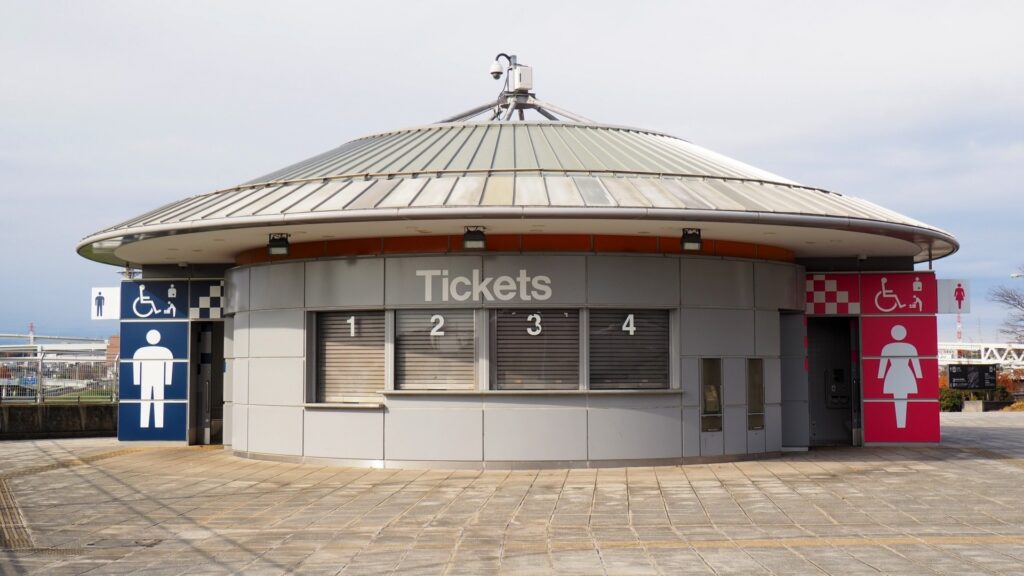
Stadium ticket office
- Best for: last-minute plans
- Main advantage: no online payment needed
- Main limitation: some matches and some venues have no matchday sales at all
Convenience-store payment or collection
- Best for: visitors who prefer to pay in cash in Japan
- Main advantage: available long hours across the country
- Main limitation: extra fees, deadlines, and Japanese-language screens
Official resale
- Best for: sold-out matches
- Main advantage: a safe alternative to unofficial resale
- Main limitation: only offered for some matches and some seat categories
Step-by-Step: How to Buy J.League Tickets Online
Step 1: Find a Match
Begin with the official J.LEAGUE fixtures page and look for a date that fits your trip.
- Search by date first if your travel plan is fixed.
- Search by city if you want a short journey from your hotel.
- Confirm the kick-off time and the stadium, not only the date.
Kick-off times and venues can be adjusted, so check again shortly before you travel. Note also that the league moved to an August-to-spring calendar for the 2026/27 season, with a winter break, so the football calendar may not match what you expect from previous years.
Step 2: Open the Official Ticket Page
From the J.LEAGUE English ticket hub, choose the competition and then the club.
- A buy-tickets link usually takes you straight to a purchase page.
- A club-site link takes you to the club’s own official website instead.
- Use official links only, so that your ticket is valid at the gate.
You can also reach clubs through the official J.LEAGUE club list if you already know who you want to watch.
Step 3: Choose the Match and Ticket Category
Purchase pages usually ask you to confirm several things before you reach the seat map.
- Home team and away team
- Adult, child or junior category
- Reserved seat or general admission
- Home side or away side of the stadium
Check the fixture, the date and the stadium once more on the confirmation screen. Clubs sometimes play at more than one venue in the same season.
Step 4: Choose Your Seat
Seat names are fairly consistent across Japanese stadiums.
- Main stand: the side with the halfway line, the dugouts and usually the best overall view.
- Back stand: the opposite side, often slightly cheaper with a similar view.
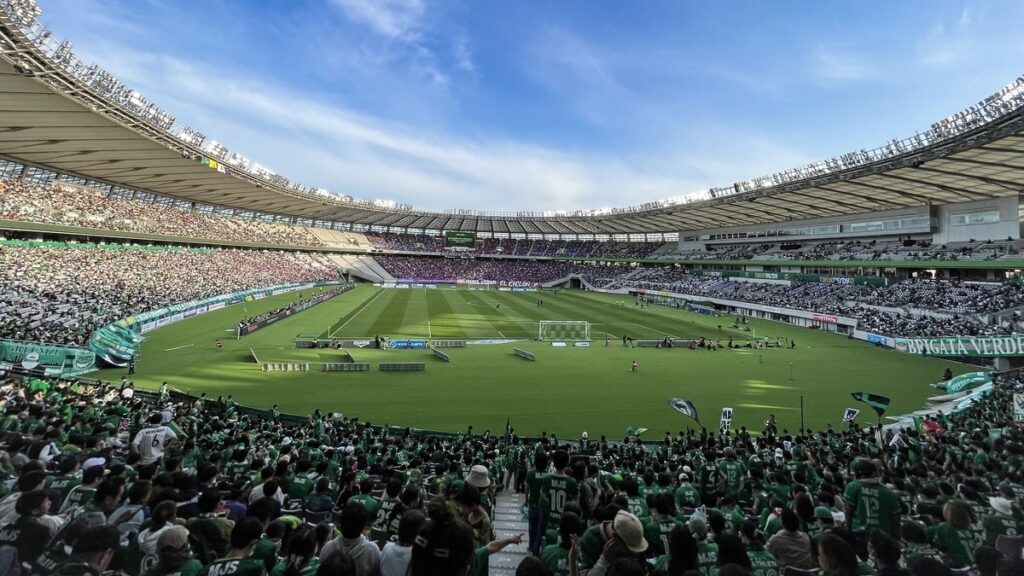
- Behind the goal: where the organised supporters gather.
- Home supporters’ section: reserved for fans of the home club.
- Away supporters’ section: a separate area for visiting fans.
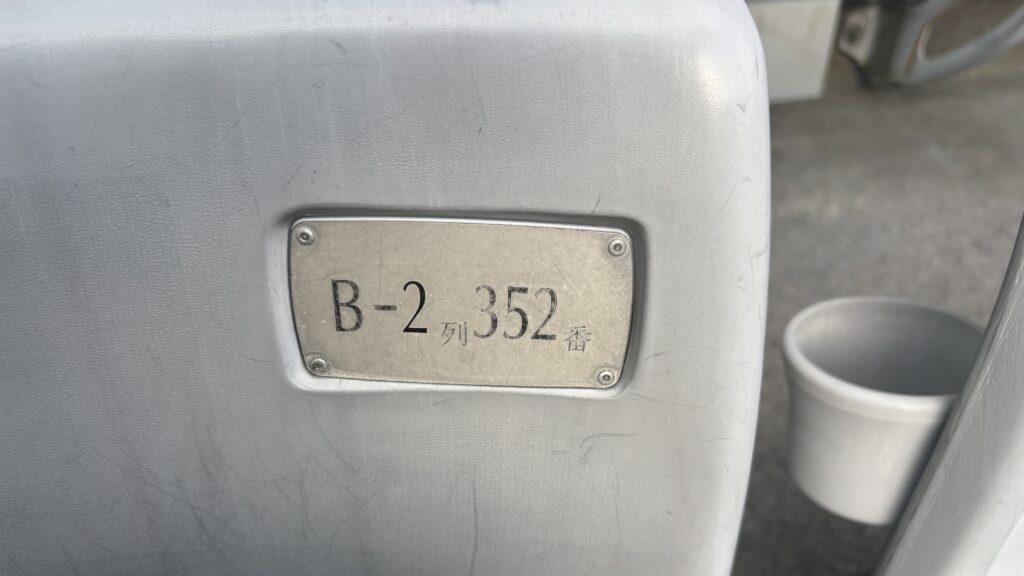
A reserved seat has a fixed row and seat number. A general admission or unreserved seat lets you sit anywhere inside that block, so you should arrive early.
For a first J.League match, a reserved seat in the main stand or back stand is usually the easiest choice. You know exactly where you are sitting, and you can still hear the supporter sections clearly.
Seat names, standing rules and supporter customs differ by club and stadium, so read the seat map and the notes on the sales page. Many clubs also ask visitors not to wear away-club shirts or colours inside home areas.
Step 5: Register or Log In
This step depends on which service you are using.
- The Japanese J.League Ticket platform asks you to create a free J.League ID before buying.
- Some English purchase pages let you buy without creating an account.
- You will normally enter a name, an email address and contact details.
A J.League ID is simply a free account used across official J.League ticketing. Registration starts from an email address, and the confirmation link is time limited, so complete it in one sitting.
If a form only accepts Japanese characters, try a browser translation and enter your name in the format the field requests. If the confirmation email does not arrive, check your spam folder, confirm the address for typos, and make sure your provider is not blocking messages with links.
Step 6: Pay for the Ticket
Payment options vary by club, match and sales service. The official Japanese platform lists several payment methods, including major credit cards such as Visa, Mastercard, JCB, American Express and Diners Club, plus convenience-store payment and Japanese mobile payment services.
Some club English pages offer a shorter list, and may accept Apple Pay and Google Pay alongside credit cards. Card payment is also protected by 3D Secure authentication, which may send a verification step to your bank.
Fees are charged on top of the ticket price. On the official Japanese platform, the published fee list currently shows a system fee of 110 yen per QR ticket, higher fees for tickets collected at a convenience store, and a settlement fee of 330 yen per order for convenience-store payment. Booking fees on club English pages may differ.
Always read the final confirmation screen and check the total, including fees, before you press the payment button.
Step 7: Receive and Save Your Ticket
You will usually be offered one of these delivery methods.
- QR ticket: displayed on your phone, and normally the cheapest and simplest option.
- Convenience-store collection: a paper ticket printed in store, with extra fees.
- Paper ticket by post or at the stadium: offered by some clubs only.
Keep the confirmation email, and find your ticket management page before matchday so you are not searching for it at the gate. Some clubs suggest saving each QR code separately, while others require the live ticket page, so follow the instructions given by the club you are visiting.
Can Foreigners Buy J.League Tickets from Overseas?
In many cases, yes. When a match is on sale through an English page and your card is accepted, you can buy before you arrive in Japan.
Buying in advance has clear benefits. You lock in a seat for a popular fixture, you can plan your travel around the kick-off time, and you avoid queuing on the day.
Some services still expect Japanese-style contact details, and some pages are Japanese only. A browser translation usually makes the flow readable, although translated buttons can occasionally behave oddly, so switch the translation off if a page stops responding.
If a payment fails, these are the most common causes to check.
- A security check by your card issuer
- 3D Secure authentication that was not completed
- A card brand the page does not support
- Billing details that do not match your card
- Browser or automatic-translation problems
If none of these explains it, contact your card issuer rather than repeating the attempt many times, and do not assume the cause without confirming it.
When Do J.League Tickets Go on Sale?
There is no single on-sale date for the whole league. Each club sets its own schedule, match by match.
- Club members and season-ticket holders often buy first.
- General sales open later, and are the point at which English sales usually begin.
- Additional seats are sometimes released closer to the match.
Demand is higher for local derbies, cup finals, matches at MUFG Stadium and fixtures involving the best-supported clubs. If your trip depends on one specific match, check the club’s official ticket page early and note the on-sale date rather than waiting.
How Much Do J.League Tickets Cost?
Prices are set by each club, so the same seat name can cost very different amounts at two stadiums. The main factors are:
- Club, competition and opponent
- Seat category and position in the stand
- Advance purchase or matchday purchase
- Adult or child ticket
- Dynamic pricing, used by some clubs for high-demand matches
As a general pattern, unreserved and behind-the-goal areas are the cheapest categories, and prices rise towards the centre of the main stand. System and issuing fees are added at checkout, so compare the total rather than the headline price.
Which Seat Is Best for First-Time Visitors?
Best for a Relaxed First Visit
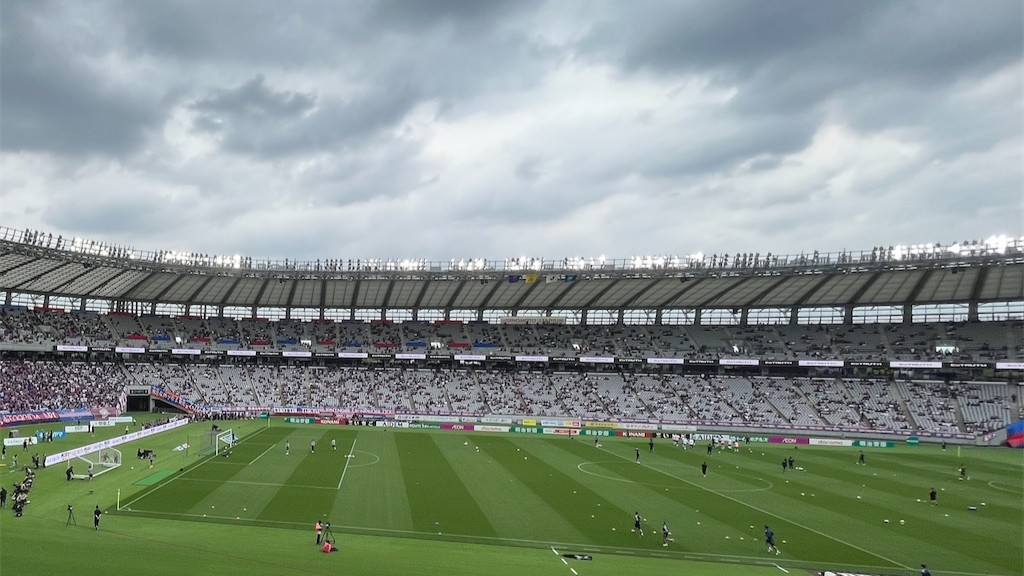
A reserved seat in the main stand or back stand. You have your own seat, a clear view of the whole pitch, and no pressure to join in with the singing.
Best for Atmosphere
Areas behind the goal, where the drums, flags and chants are concentrated. Standing and supporter customs differ by club and by seat category, so read the notes on the sales page before choosing.
Best for Away Supporters
The away supporters’ section, sold as a separate category. If you are visiting to support the travelling club, this is the section to buy, and entry gates may be separate from the home side.
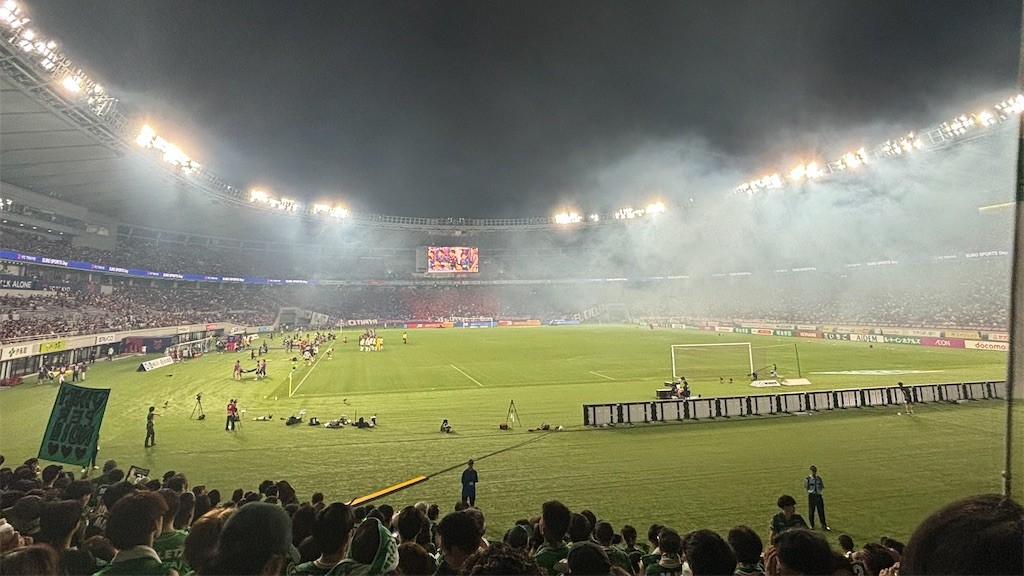
Best for Families
Reserved seats near a concourse entrance, close to toilets and food stalls. Some clubs also sell family or group categories with their own conditions.
Every stadium is laid out differently, so check the seat map on the official page before you decide.
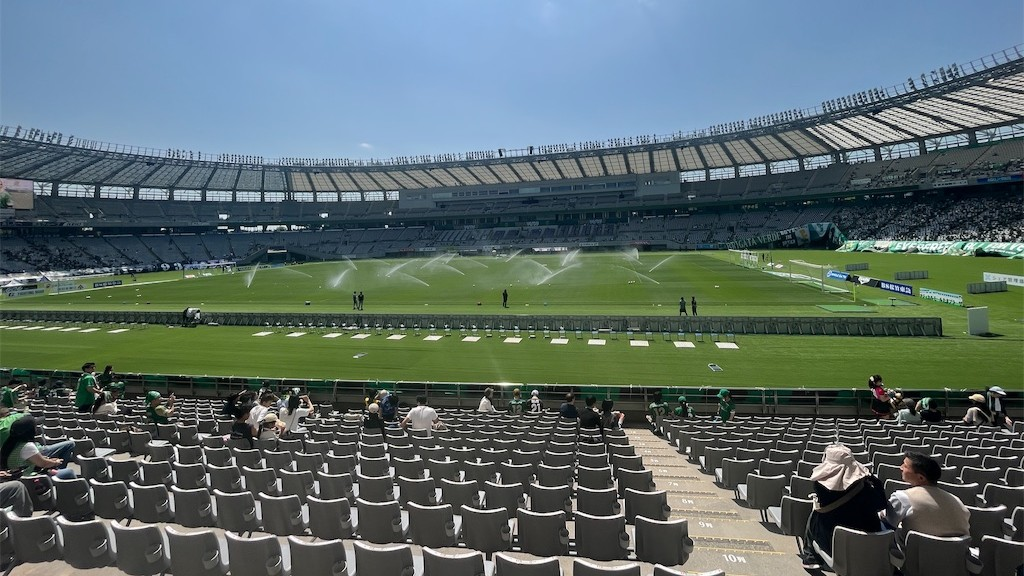
家族向け
コンコース入口に近い指定席です。トイレや売店へ移動しやすくなります。独自の条件を設けたファミリー席やグループ席を販売するクラブもあります。
スタジアムごとに構造が異なるため、決める前に公式ページの座席図を確認してください。
Can You Buy J.League Tickets at a Convenience Store?
Convenience stores are still part of Japanese ticketing, but they play three different roles, and it helps to know which one you are using.
- Buying at a store terminal: possible for some events, with Japanese-language screens.
- Paying in store after buying online: you receive a payment number and pay in cash by a deadline.
- Collecting a paper ticket in store: you print the ticket at the machine or counter after payment.
Availability depends on the match and the sales service, and extra fees apply. For most overseas visitors, buying online and choosing a QR ticket is simpler, cheaper and easier to manage in English.
Can You Buy Tickets at the Stadium?
Sometimes, but this should not be your first plan.
- Some matches have no same-day sales at all, and this can be a venue-level rule.
- Popular fixtures sell out in advance.
- Matchday prices are not always the same as advance prices.
- Ticket-window locations and opening times are published by the club, not the league.
Availability is often better in J2 and J3, where crowds are smaller, but even there it is not something to rely on. Buy online if you can, and treat the ticket window as a backup.
What to Do If the Match Is Sold Out
Work through these options in order.
- Check official resale for that match.
- Look for additional ticket releases.
- Read the club’s official announcements.
- Look for another match in the same city or region.
- Consider a J2 or J3 match nearby.
Official resale is a service that lets a buyer who can no longer attend pass their ticket on legally through the official system. According to the official resale guide, resale purchases are made by credit card and issued as QR tickets, with a purchase fee per ticket.
Resale is not offered for every match, and the eligible seat categories and listing periods are decided by each club, so check the sales page for the fixture. Tickets bought from unofficial resale sites or from strangers on social media may be refused at the gate, so it is not worth the risk.
How to Use a QR Ticket at the Stadium
- Open your confirmation email or ticket management page.
- Display the correct QR code for that match and seat.
- Turn your screen brightness up.
- Have the code ready before you reach the gate.
- Hold the code over the reader at the entrance.
- Keep the ticket available until you have found your seat.
If you are entering as a group, check whether the service allows several tickets to be shown from one phone, or whether each person needs their own. Some clubs offer a ticket transfer function that sends a ticket to another person’s account, and the exact rules are published on the club’s ticket pages.
Battery life matters more than people expect on a long matchday. A compact power bank is a small thing to pack and removes the worst-case problem at the gate.
Common Problems and Solutions
Tourist-Friendly J.League Stadiums
The detailed access guides linked below are currently available in Japanese. You can use your browser’s translation feature to read them in English.
MUFG Stadium / Japan National Stadium
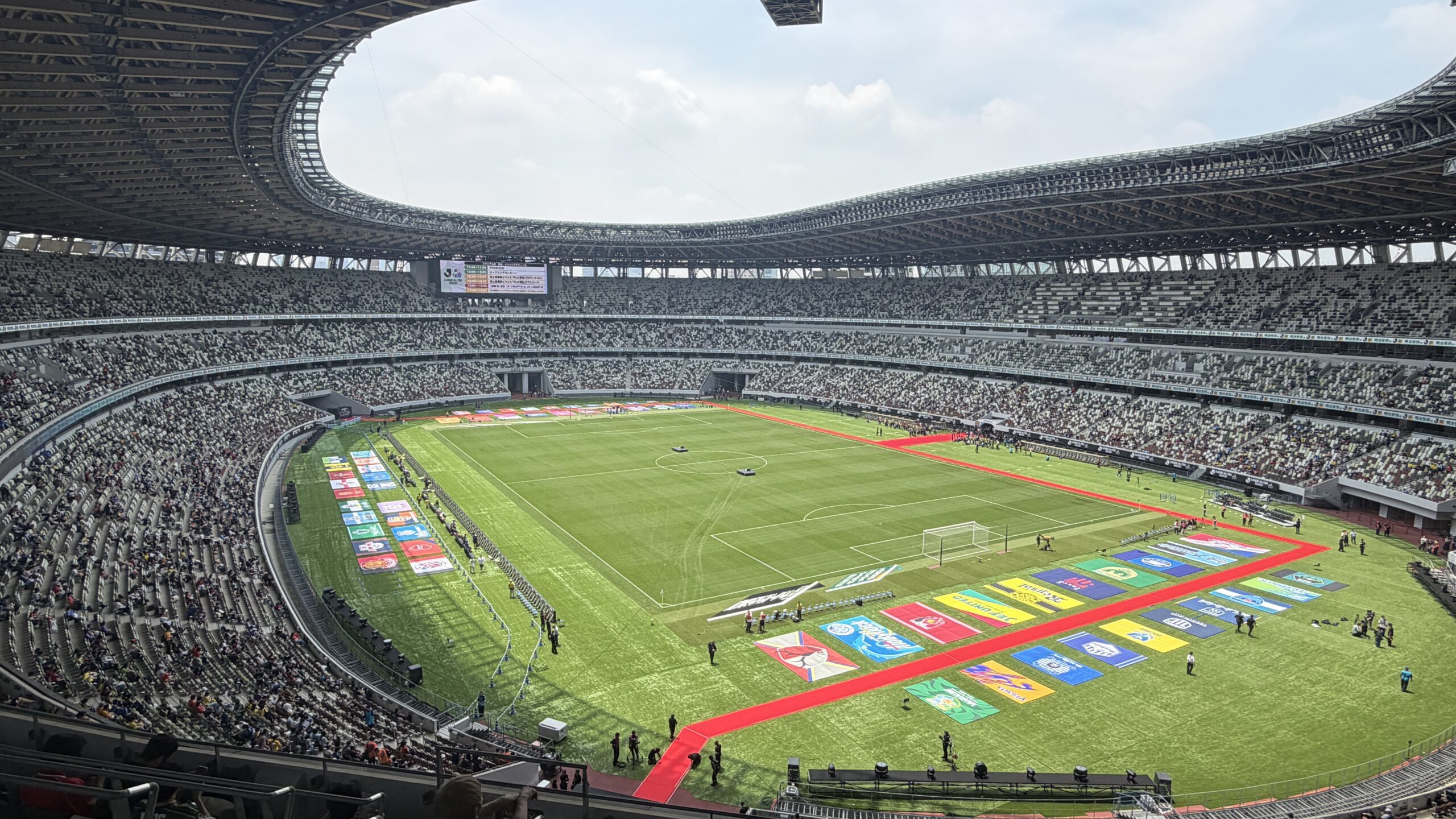
Japan’s national stadium sits in central Tokyo and has been known as MUFG Stadium since January 2026, with Japan National Stadium remaining the formal name.
It is a short walk from several stations, including Kokuritsu-Kyogijo and Sendagaya, which makes it one of the easiest large venues to reach without a car.
It hosts selected J.League fixtures rather than a full home schedule, so check the calendar before planning a trip around it. The scale of the ground and the walk through the Meiji Jingu Gaien area make it a memorable first match. Read the full National Stadium access guide before you travel.
Saitama Stadium 2002
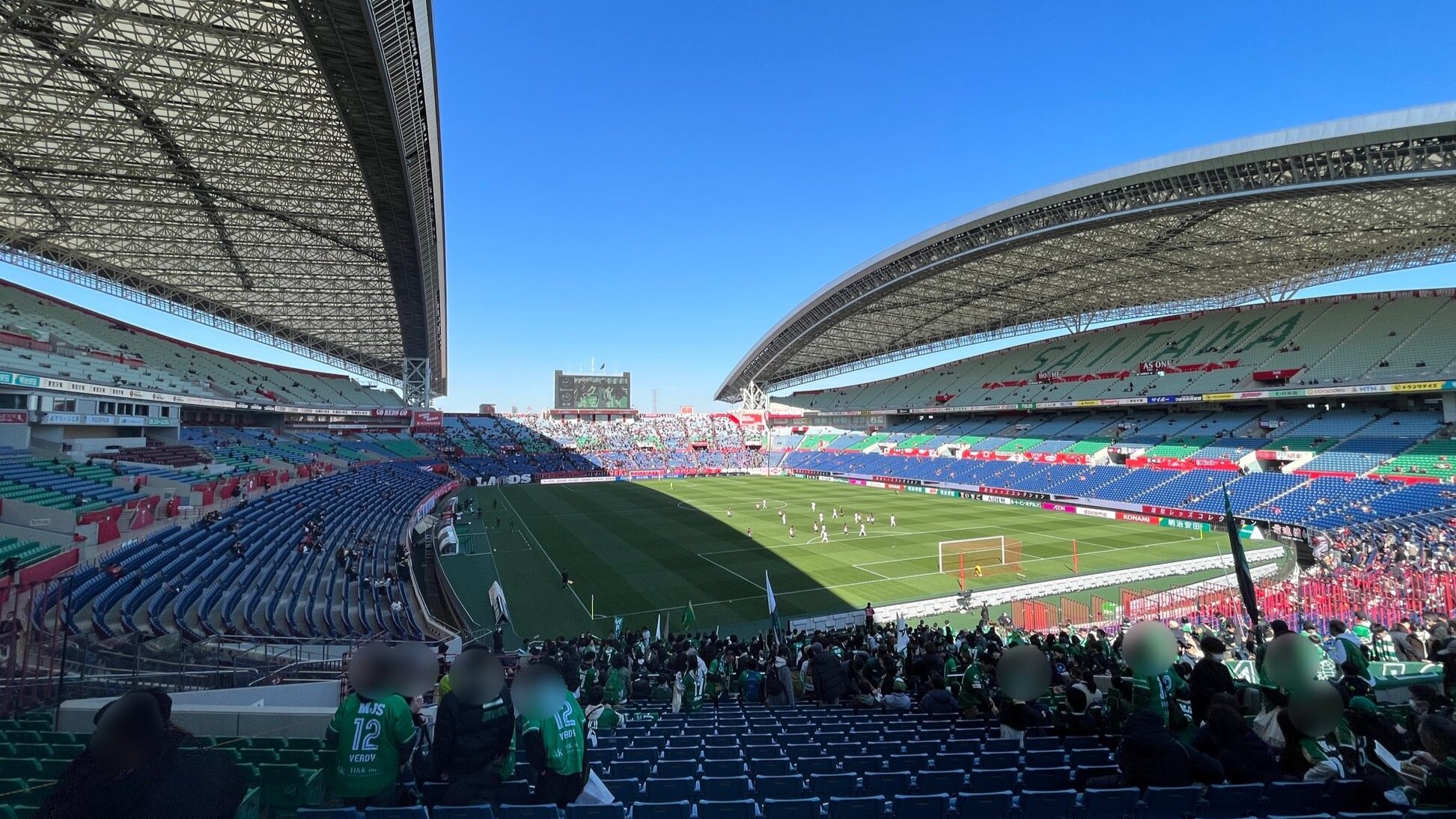
Home of Urawa Reds and one of the largest football-specific stadiums in Asia, Saitama Stadium 2002 is built for football, with steep stands close to the pitch and no running track.
Urawa supporters are among the loudest in Japanese football, and a full house here is a genuine occasion. It sits north of central Tokyo and takes roughly an hour door to door, ending with a walk or shuttle from Urawa-Misono station.
Allow extra time after the final whistle, because the station fills quickly. See the Saitama Stadium 2002 access guide for route details.
Nissan Stadium
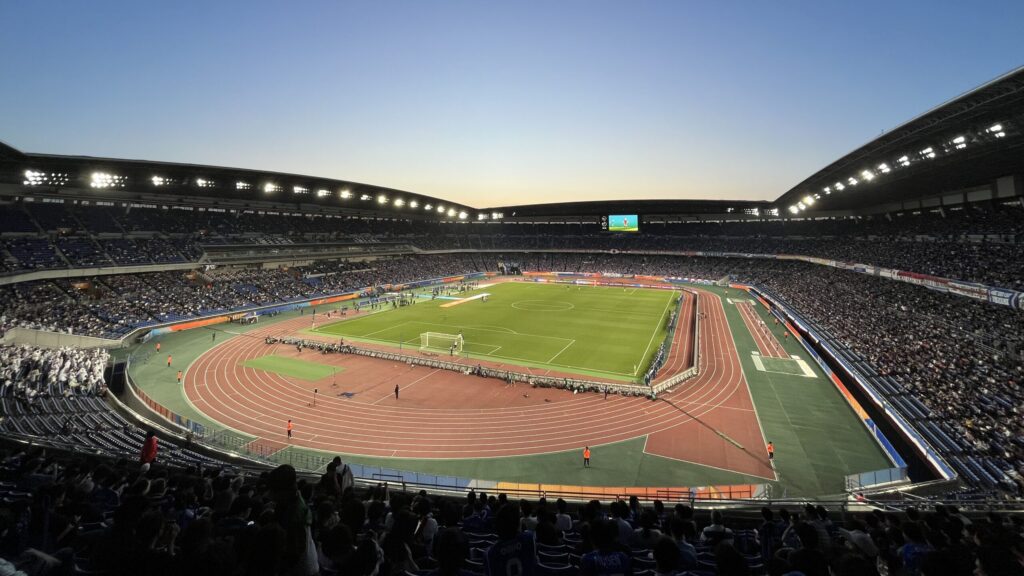
Nissan Stadium in Yokohama is Japan’s largest stadium and the home of Yokohama F. Marinos. Access is straightforward from Shin-Yokohama station, which is also a Tokaido Shinkansen stop, so it works well if you are travelling between Tokyo and Kyoto or Osaka on the same day.
The stadium has an athletics track, so seats closer to the halfway line give a better view of play. Check the Nissan Stadium access guide for the walking routes from each station.
If your trip is based in Kansai, Panasonic Stadium Suita and Yodoko Sakura Stadium in Osaka and Sanga Stadium by KYOCERA in Kyoto are all reachable by train and are worth checking against your dates.
Plan Your J.League Matchday
Jリーグ観戦当日の準備
Find a Hotel Near the Stadium
Evening kick-offs and crowded post-match trains are the two things that catch visitors out. Staying near the stadium, or near the main station you will use, turns a long journey back into a short one.
Find a convenient place to stay
Rooms near popular stadiums fill up quickly on matchdays, especially for derbies and weekend fixtures, so it is worth booking as soon as your match is confirmed.
スタジアム周辺のホテルを探す
旅行者が見落としがちなのは、ナイトゲームと試合後の混雑です。スタジアムの近く、または利用する主要駅の近くに泊まると、帰りの長い移動が短くなります。
便利な宿泊先を見つける
人気スタジアム周辺の部屋は、ダービーや週末開催を中心に試合日に早く埋まります。観戦する試合が決まったら早めの予約が安心です。
Prepare Mobile Internet Access
A working data connection makes the day easier. You may need it to open your QR ticket, check train transfers, follow official announcements about kick-off times, and find the right gate.
Stay connected on matchday
An eSIM is usually the simplest option for a short trip, because you can set it up before you land.
Check eSIM options for travelling in Japan
モバイル通信を準備する
通信環境が整っていると当日が楽になります。QRチケットの表示、乗り換えの確認、キックオフ時刻に関する公式発表の確認、入場ゲートの確認などに役立ちます。
試合当日も通信環境を確保する
短期滞在なら、渡航前に設定できるeSIMが手軽な選択肢です。
Check the Stadium Access Guide
Before you travel, confirm your nearest station, the walking time, the gate for your seat, and how busy the return journey is likely to be. It is also worth reading a general guide to travelling to a J.League match, a summary of the 2026/27 season calendar, and a matchday packing list.
スタジアムのアクセスガイドを確認する
出発前に、最寄り駅、徒歩時間、自分の席のゲート、帰りの混雑具合を確認しておきましょう。あわせて、Jリーグ観戦の遠征ガイド、2026/27シーズンの日程解説、観戦の持ち物リストも参考になります。
Frequently Asked Questions
Can tourists buy J.League tickets?
Yes. There is no general requirement to live in Japan. Start from the official J.LEAGUE English ticket page, and use the club’s official page if the match is not sold in English. Conditions are set per match, so read the sales page before paying.
Can I buy J.League tickets before arriving in Japan?
Often yes, once the match is on general sale and the page accepts your card. Choosing a QR ticket is the easiest option from overseas, because nothing has to be posted or collected. Availability differs by club, so check the specific fixture.
Can I use a foreign credit card?
Frequently yes. The official Japanese platform lists major brands including Visa, Mastercard, JCB, American Express and Diners Club, and some club English pages also accept Apple Pay and Google Pay. Declines can still happen, usually because of a card issuer check or an incomplete 3D Secure step.
Do I need a Japanese phone number?
It depends on the service. Some English purchase pages ask only for basic contact details, while other forms are built around Japanese-style entries. Check the required fields before you start, and keep an email address you can access while travelling.
Do I need a J.League ID?
You need one to buy through the Japanese J.League Ticket platform, where registration is free and starts from an email address. Several English purchase pages do not require it. The requirement is shown on the page you are buying from.
Can I buy tickets on matchday?
Sometimes, but not always. Some clubs and venues do not sell tickets on the day at all, and popular matches sell out in advance. If you do plan to try, confirm the ticket window location and opening time on the club’s official page first.
Can I buy tickets at 7-Eleven?
Convenience stores are used for payment and for collecting paper tickets on the official Japanese platform, with additional fees and payment deadlines. This is not available for every match, and the screens are in Japanese. Buying online with a QR ticket is simpler for most visitors.
What happens if the match is sold out?
Check official resale first, then look for additional releases and club announcements. If nothing appears, consider another fixture in the same region, including J2 and J3 matches. Avoid unofficial resale sites, because those tickets may not be accepted at the gate.
Are children’s tickets available?
Most clubs sell child or junior categories, and some offer free or reduced entry for very young children. Age definitions and proof requirements are set by each club, so check the price page for the match you are attending.
Can I wear an away-team shirt in the home section?
Usually not. Many clubs ask visitors not to wear away colours inside home areas, and stewards may act on it. If you are supporting the visiting team, buy a ticket in the away supporters’ section, where entry gates may also be separate.
Do I need to print my QR ticket?
In most cases you can enter by showing the code on your phone. Some clubs still require an exchange for a paper ticket, and a few suggest saving the code in advance. Check the instructions given by the club before matchday.
Conclusion: Your J.League Ticket Checklist
Buying J League tickets is mostly a matter of following the official route in the right order.
- Choose a match.
- Check the official English ticket page.
- Confirm the stadium and seat category.
- Complete payment and check the total.
- Save your QR ticket or collection information.
- Check your route and kick-off time again before travelling.
From here, there are three useful next steps: buy through the official ticket page, read the access guide for the stadium you are visiting, and book a room nearby so the evening ends comfortably.
A first J.League match tends to stay with people. The singing starts before kick-off, the food is better than you expect, and by the second half you will have picked a side.
- Start from the official J.LEAGUE English ticket page, then follow the link for your match.
- Buying from overseas is often possible, and QR tickets are the easiest delivery method.
- A reserved seat in the main or back stand suits most first-time visitors.
- If a match is sold out, use official resale rather than unofficial sites.
- Rules, fees and sale dates differ by club and match, so always confirm on the official page.
Last checked: August 4, 2026
最終確認日:2026年8月4日
コメント